



Quick summary
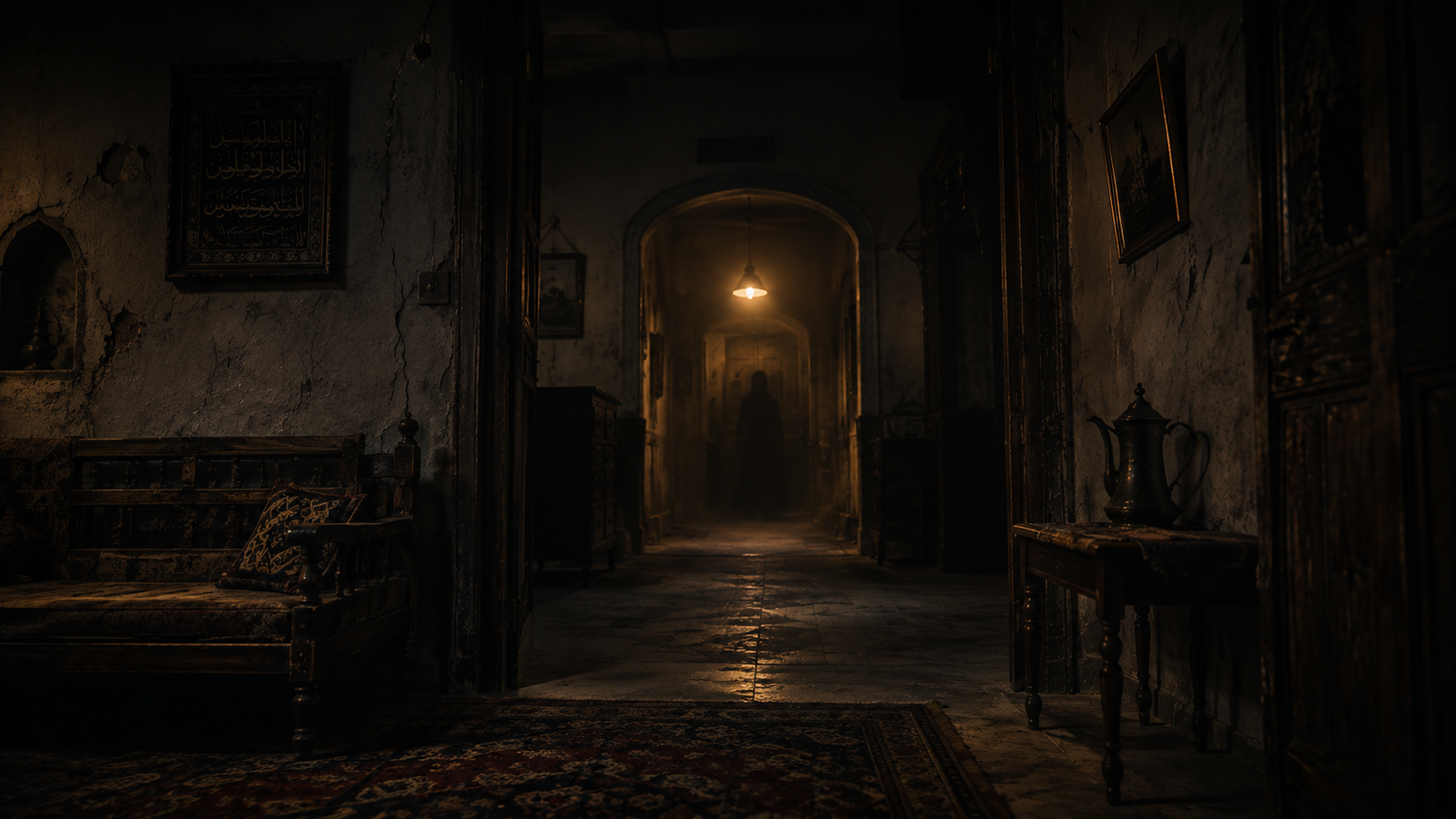
- On this earth, there are creatures we cannot see, yet they see us.
- This is the hidden world of the Jinn, who live among us, often within the very walls of our homes.
NavigationIn this article
On this earth, there are creatures we cannot see, yet they see us. This is what the Holy Quran pointed to in its description of the world of the Jinn—that hidden realm that surrounds humanity without us perceiving its details. The Jinn, like humans, include both the righteous and the disbelievers; they have their own lives, they eat, marry, and even possess societies and laws for which they will be held accountable on the Day of Judgment. Although their existence is fundamentally separate from humans, some may intersect with our lives, especially within our homes.
Among these types are what are known as "Ammar al-Buyut" (House Dwellers), a type of Jinn that chooses to reside inside human homes, unlike the majority of their kind. They are called by this name due to their long stay and stability in a place, as the term "Ammar" is linked to habitation and permanence.
The Nature and Forms of House Dwellers
Some accounts suggest that House Dwellers may take on various forms, most notably that of snakes. It has been mentioned in the Prophetic tradition (Sunnah) that some of these snakes are not merely animals, but may be Jinn in disguise, whether righteous or malevolent. For this reason, the Prophetic guidance advises caution before killing such creatures found inside homes; it is recommended to warn them for three days before taking any action. If they remain after that, they are considered harmful devils.
A famous incident was reported regarding one of the Companions who killed a snake in his house, only to discover later that it was a Jinn, which reflects the sensitivity and danger of this subject.
Are All Houses Inhabited by Dwellers?
Not all houses are necessarily inhabited by these dwellers, but some homes may be more attractive to them than others, especially those where the remembrance of God is absent, where sins are prevalent, or where abandoned and dark corners abound. Damp places, old storage rooms, under staircases, and bathrooms are considered suitable environments for their presence, according to religious and popular culture.
Types of Dwellers and Their Influence
House Dwellers can be divided—according to common lore—into three types:
- Righteous Dwellers: They do not harm humans and live quietly without interference.
- Harmful Dwellers: They may cause disturbances, such as strange noises, nightmares, or feelings of distress.
- Neutral Dwellers: They neither appear nor influence, living in complete isolation.
Some mysterious phenomena are attributed to their presence, such as hearing unexplained footsteps, objects moving without a clear cause, or feeling suffocated in certain areas of the house.
How Can a House Be Fortified?
Religious texts agree that prevention is the foundation, and fortifying a house does not require complex means, but rather relies on simple yet effective practices, such as:
- Consistently reciting the Quran, especially Surah Al-Baqarah.
- Regularly reciting Ayat al-Kursi and the protective Surahs (Al-Mu'awwidhatayn).
- Increasing daily remembrances (Adhkar).
- Maintaining the cleanliness of the house and getting rid of abandoned items.
- Invoking the name of God upon entering and leaving, and when performing daily tasks.
Remembrance is considered the strongest fortress, as it prevents devils from settling or exerting influence, making the house an unsuitable environment for them.
House Dwellers in Popular Memory
The discourse on House Dwellers is not limited to religious texts but extends to folklore in various Arab countries. In the Maghreb, it is customary to offer a greeting when entering abandoned places; in Egypt, stories are told of nocturnal sounds attributed to the Dwellers; while in the Levant and the Gulf, phrases like "Dastur ya hadireen" (Permission, O those present) are common as a form of asking for leave before entering empty spaces.
These practices reflect a shared perception: that there are "hidden neighbors" living with us in the same space, and they must be treated with caution and respect.
In Conclusion
The world of House Dwellers remains part of the unseen, the details of which cannot be definitively proven, yet it is present in both religious texts and folklore alike. Between fear and curiosity, the most important solution remains fortification and moderation; one should not exaggerate in terror, nor neglect prevention. A house where God is remembered and cleanliness is maintained remains safer and more tranquil, regardless of the beings that may surround it.
Have a thought or question about this article?
Continue the conversation in the community and share your ideas with readers and writers.

Comments 0
Share your thoughts respectfully. Abusive or disruptive comments may be hidden.